Health Benefits of Freshly Milled Flour
Bread that’s actually good for you? Um…YES! Bread made from freshly milled flour contains 44 micronutrients that your body actually needs! This post will go over what freshly milled flour is, the health benefits of freshly milled flour, and how it’s different from commercially milled shelf stable flour.

Introduction
My journey of freshly milled grains started when I saw a reel on instagram haha. This lady – I’m not even sure who she was – said, “If you are making sourdough bread with shelf stable flour you are not getting anywhere near the nutrients than if you were to bake with freshly milled grains”. Hmm. That made me ponder for a bit.
Why is freshly milled flour better for me? Isn’t all flour the same? Doesn’t Sourdough create that good gut health that I’ve been looking for anyway? Why does this all matter? And why is there a growing trend in milling your own flour at home?
Well, really there is a lot more to the health benefits of freshly milled flour than what I originally thought! Because I research a LOT, this post is pretty extensive. I have included a table of contents so you can read through the whole thing if you are curious like me or just get to the part you really want to read about if you want to just get to the point and are not into all the details behind all of this.

Key Benefits of Freshly Milled Flour
I will go into more detail about each micro nutrient and what they each offer our bodies below but let’s just look at some of the key benefits of freshly milled flour. Freshly milled flour offers several notable health benefits compared to pre-milled, store-bought flour:
- Higher Nutrient Content: Freshly milled flour retains more vitamins, minerals, and antioxidants because the whole grain, including the bran and germ, is ground just before use. Over time, nutrients in flour degrade, so milling fresh preserves these nutrients.
- More Fiber: Since freshly milled flour often uses the entire grain, it contains more dietary fiber, which supports healthy digestion, helps regulate blood sugar, and promotes satiety.
- Better Flavor and Aroma: Freshly milled flour has a richer, nuttier flavor and aroma, which can enhance the taste of baked goods without needing extra sugar or fat.
- Lower Glycemic Impact: Whole grain freshly milled flour tends to have a lower glycemic index than refined flours, helping to stabilize blood sugar levels.
- No Additives or Preservatives: Freshly milled flour is free from additives, bleaching agents, or preservatives often found in commercial flours.
- Supports Whole Grain Consumption: Milling your own flour encourages use of whole grains, which are linked to reduced risks of heart disease, type 2 diabetes, and certain cancers.

What is Freshly Milled Flour?
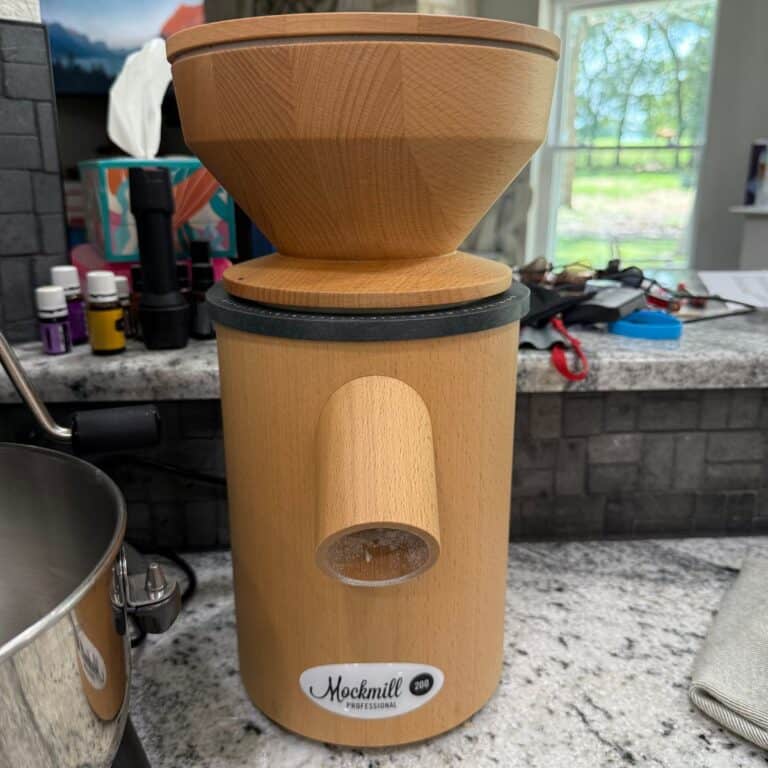
Freshly milled flour is flour that is ground from whole grains—such as wheat, rye, or barley—just before use, ensuring maximum freshness and nutrient retention.
Unlike commercially processed flour that may sit on shelves for months, freshly milled flour contains all parts of the grain, including the bran, germ, and endosperm, providing superior flavor, higher fiber content, and enhanced nutritional value.
Milling your own flour at home or sourcing it fresh allows you to enjoy whole grain goodness with no additives or preservatives.
Researching Freshly Milled Flour vs Shelf Stable Flour
Back to that reel I saw…That thought stuck with me for a few days…then I started to research. I found that refined flour reduces vitamins, minerals, and fiber by an average of 70-80%! Wow, right? I am only getting 20-30% of flour’s original nutritional value?! I feel cheated.

Commercial flour milling involves cleaning whole grains to remove impurities, then passing them through a series of rollers that crush and grind the grains into fine flour. During this process, the grain’s bran and germ are often separated from the endosperm to produce refined flour, which has a longer shelf life but lower nutritional content.
The bran and germ may be removed or added back later, depending on the flour type. The flour is then sifted, blended, and sometimes treated with bleaching agents or additives before packaging and distribution.
This large-scale process allows for mass production but often results in flour that has lost some of its natural nutrients and flavor compared to freshly milled flour.
The truth of the matter is that refined flour does not even come close to fresh flour in many ways. It loses nutrients from the bran and germ being separated out, it has synthetic “vitamins”added back in, is treated at a high temperature which deactivates enzymes, and then it oxidizes while sitting on the shelf.
Another fact that I found interesting is that over three billion people are currently micronutrient (i.e. micronutrient elements and vitamins) malnourished (source).
No wonder that so many people feel constantly sick! We have taken something full of nutrition, taken the good stuff out and put bad stuff back in just so that it can be “shelf stable”.
| Nutrient | Freshly Milled Flour | Commercially Processed Flour |
|---|---|---|
| Fiber | High (contains bran and germ) | Low (bran and germ mostly removed) |
| Vitamin B Complex | Rich (B1, B2, B3, B6 retained) | Significantly reduced |
| Vitamin E | Present (from germ) | Minimal to none |
| Minerals | High (iron, magnesium, zinc) | Lower (due to removal of bran and germ) |
| Antioxidants | Abundant | Mostly lost during processing |
| Protein | Slightly higher (whole grain) | Slightly lower |
| Shelf Life | Short (due to natural oils) | Longer (due to removal of oils) |
| Additives | None (pure grain) | Often contains bleaching agents and preservatives |
Notes:
- Freshly milled flour retains the entire grain, preserving nutrients naturally found in the bran and germ.
- Commercially processed flour is often refined, removing nutrient-rich components to improve shelf life and texture but sacrificing nutritional value.
How are nutrients absorbed?
Nutrients from whole foods like freshly milled flour are naturally bound within the grain’s complex structure, which allows our digestive system to absorb vitamins, minerals, and fiber efficiently because they contain both types of fiber and a wide range of phytonutrients.
The presence of natural cofactors and enzymes in whole grains helps optimize nutrient uptake and utilization in the body.The fiber and nutrients help maintain your blood sugar, help you feel full for longer, preserve your insulin sensitivity, and protect you from a slew of diet-related diseases. (source)
In contrast, artificial supplements added back into refined flours—such as synthetic vitamins and minerals—often lack these natural cofactors and may have different chemical forms.
This can reduce their bioavailability, meaning the body may not absorb or use them as effectively as nutrients from whole, unprocessed foods. As a result, relying solely on fortified flours may not provide the same health benefits as consuming freshly milled whole grain flour.
Refined flour – you guessed it – does the exact opposite! It increases the risk (source) and incidence of obesity, type 2 diabetes, high blood pressure, and even certain cancers! (source)

What are Micronutrients vs Macronutrients
Macronutrients are the nutrients our bodies need in large amounts to provide energy and support vital functions. They include carbohydrates, proteins, and fats.
Carbohydrates are the primary energy source, proteins are essential for building and repairing tissues, and fats support cell structure, hormone production, and energy storage.
Micronutrients, on the other hand, are vitamins and minerals required in smaller amounts but are crucial for maintaining overall health. They play key roles in immune function, bone health, energy metabolism, and the prevention of chronic diseases.
Despite being needed in trace amounts, a deficiency in micronutrients can lead to serious health problems.
Vitamins and minerals are vital for growth, immune function, brain development and many other important functions (1, 2 Source). Depending on their function, certain micronutrients also play a role in preventing and fighting disease (3, 4 Source)
Additional Benefits of Using Freshly Milled Flour
Environmental Benefits:
Using freshly milled flour often means buying whole grains in bulk or growing your own, which reduces reliance on heavily packaged commercial flours. This minimizes plastic and paper waste, lowering your environmental footprint.
Additionally, milling at home or sourcing locally supports sustainable agricultural practices by encouraging the use of heritage grains and reducing transportation emissions associated with mass-produced flour.
Customizable Milling:
This is one of my favorite parts! Freshly milled flour gives you full control over the milling process. You can choose the type of grain—wheat, rye, spelt, or even ancient grains—and adjust the grind from coarse to fine depending on your recipe needs.
This flexibility allows you to experiment with textures and flavors, tailor flour blends for specific dietary preferences, and create unique homemade products that aren’t possible with standard commercial flours. And trust me, once you start experimenting with these new flavors and textures, you’ll never go back!
Encourages Healthy Choices During Eating and Cooking:
Milling your own flour fosters a deeper connection to your food by encouraging you to slow down and appreciate the ingredients you use. It creates reflection about cooking and eating habits, as you become more aware of the grain’s origin, freshness, and nutritional value.
This mindfulness can lead to healthier food choices, reduced food waste, and a greater appreciation for homemade meals made from scratch.

How to Incorporate Freshly Milled Flour into Your Diet
Just Try It: Try freshly milled flour recipes today!
Simple recipe ideas: Some fun recipes to start with are these Blueberry Muffins, Sourdough Pancakes, and Whole Wheat Sourdough Bread!
Tips for beginners: Find out more about milling equipment, storage, and usage by signing up for our free Intro to Baking with Freshly Milled Grains e-book!
What are the 44 Essential Micronutrients Found in Freshly Milled Flour?
Here is the list of the 44 essential micronutrients found in freshly milled grains linked to articles that tells you exactly why they are needed in our bodies.
If you’d like to see a fun chart comparing the amounts of each of these nutrients compared to all-purpose flour per 100g of flour Unsifted has created a great one!
- Protein
- Carbohydrates
- Fiber
- Calcium
- Iron
- Magnesium
- Phosphorus
- Potassium
- Zinc
- Copper
- Manganese
- Selenium
- Thiamin
- Riboflavin
- Pantothenic Acid
- Vitamin B6
- Folate
- Choline
- Beta Carotene
- Vitamin A
- Lutien + zeaxanithin
- Vitamin E
- Vitamin K
- Total Lipid Fat
- Fatty Acids (Saturated)
- Fatty Acids (Monosaturated)
- Fatty Acids (Pollyunsaturated)
- Tryptophan
- Threonine
- Isoleucine
- Leucine
- Lysine
- Methionine
- Cysteine
- Phenylalanine
- Tyrosine
- Valine
- Arginine
- Histindine
- Alinine
- Aspartic Acid
- Glutamic Acid
- Proline
- Serine
I know that was a lot of information, but knowing that I get each of these in my freshly milled flour helps me to know that I am serving my family the best, most nourishing meals that I can!